Access2

Without CPD, you’re going backwards

Access2-CPD-Training

What is CPD?

If you’re not sure what the letters CPD mean, it’s time you got up to speed. For those of us who know we should be keeping on top of our professional development but aren’t quite prioritising the job, the message is simple: in a fast-moving world, standing still is akin to going backwards.

When you first qualify as a professional, whatever your career, in general terms your technical knowledge should be up-to-date. You’re lacking practical experience but over the years you accrue plenty of it, and there might not be many things in your working life that you find beyond your capabilities. But it’s also possible that standards have changed, and you’ve not quite got a grip on them. You might find you lose business because you don’t have formal certification for something you could, through long experience, do with your eyes closed.

Essential for Professional Growth

These days customers expect proven competence. They expect professionals to offer them the most current products, advice and support, and not only that but also to be on the ball with likely future developments. Organisations like the Guild of Architectural Ironmongers (GAI) and the Institute of Architectural Ironmongers (IAI) offer a wide range of CPD training not to swell their coffers but to uphold and promote the high ethical and professional standards of their members.

Although CPD can take us away from the day job, it’s far more than a tick-box exercise. It’s a way of ensuring that the advice and guidance you provide to your clients is as relevant and up to date as it can possibly be. On a personal note, it’s also a way of safeguarding your career. Your existing employer may be comfortable with your expertise and competence, but maybe they’re unable to secure a contract because you don’t have a certain qualification. If you need to change jobs, how are you going to demonstrate that you have the skill set required?

Why attend a CPD course?

The right CPD experiences could help you get on in your career. The desire for self-improvement speaks volumes about your commitment, work ethic and attitude. What’s more, undertaking CPD training keeps you involved in a network of fellow professionals, and that’s got to be a good idea.

When a professional organisation states that so many hours of CPD are requirements for membership, they’re acting in your interests. We are now working in a truly global economy that’s largely driven by previously unimaginable technology. Communications are effectively instantaneous, and audiences are unlimited. To continue operating as you were five or ten years ago isn’t standing still. As everyone else advances, you are regressing. Being on top of your CPD prevents this. Learning keeps you moving forwards and often the subjects covered are very interesting.

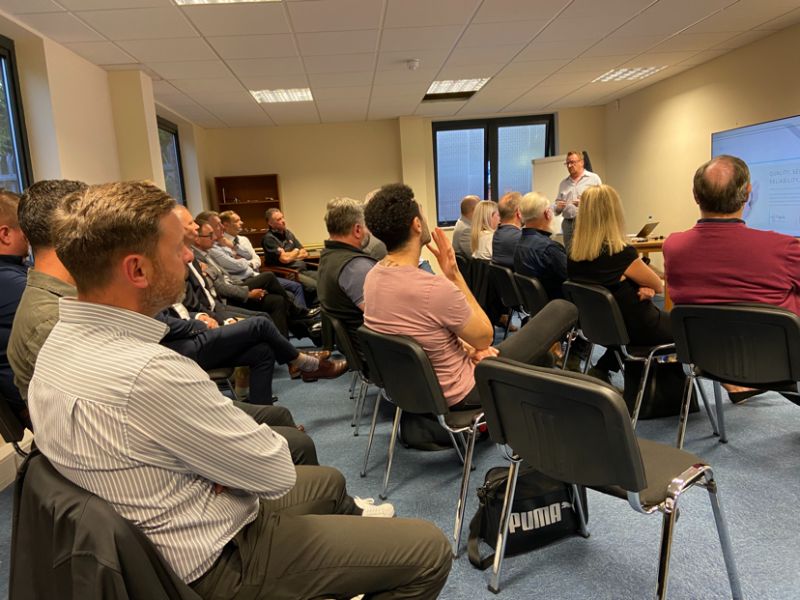
At Access2, we are working with the IAI and GAI to offer CPD courses, but those three letters – CPD – can be a bit off-putting. They manage to make training sessions sound rigid and formal whereas often they’re relaxed, informative and fun – more like a product seminar or an exchange of ideas than a return to school.  It’s become obvious as we’ve talked to several door manufacturers that the know-how we’re passing on would be very useful for them too. We can easily tailor a session, perhaps to fit around lunchtime, and over something like pizza or a pile of sandwiches help them to learn and understand more about locks, lock standards and technology.

What to expect?

If you’re a door manufacturer your customers want to know they’re buying a secure product. But unfortunately, locks aren’t simple. If you’d like to be confident that you’re selling what your customers expect, we can help. In a CPD session, we can take you through the relevant points of cylinder design, the security standards and all the pros and cons of the different options on the market. We’ll give you all the knowledge you need, leaving you fully equipped to make the right choices.

CPD, product training, seminars – whatever we call the sessions, the knowledge that gets shared is far more than a nice to have. It’s a tool for building stronger businesses and more competence across a wide range of professions. We’re happy to be playing our part.

For course dates, register your interest below:
sales@access2.com

Keep the conversation going

More Posts

Why it pays off to invest in mechatronic or electronic security technology

Security has moved on. Traditional mechanical cylinders still have their place, but today’s buildings demand more: greater control, better auditability, remote management, and future-ready flexibility. That’s where mechatronic and electronic security technology delivers measurable value. One standout example is the TOKOZ ePRO mechatronic cylinder, a solution that intelligently blends mechanical robustness with electronic access control. It represents a smart evolution rather than a wholesale replacement of proven mechanical security. What is Mechatronic Security? Mechatronic security combines: The result? A cylinder that looks and installs like a traditional euro profile lock, but operates within a controlled electronic ecosystem. The TOKOZ ePRO Advantage The TOKOZ ePRO cylinder functions like a standard euro profile cylinder, meaning: Installation is straightforward, with no radical door modifications required, making it ideal for retrofit projects as well as new builds. But beyond mechanical familiarity lies its real strength: electronic access control embedded inside a secure cylinder platform. Why investing in Mechatronic Technology pays off 1. Enhanced access control without replacing every door With mechanical-only systems, lost keys often mean expensive cylinder changes. With mechatronic systems: This dramatically reduces long-term operational costs. 2. Full audit trail and accountability Traditional keys leave no record. Mechatronic cylinders provide: For commercial, healthcare, education, and multi-occupancy buildings, this level of oversight is increasingly essential for compliance and risk management. 3. Flexibility for changing environments Buildings evolve. Staff change. Tenants rotate. Security requirements increase. The TOKOZ ePRO system allows: This adaptability ensures the system continues to deliver value long after installation. 4. Retaining mechanical security strength One common concern with electronic systems is durability. The ePRO addresses this by maintaining: You gain electronic control without sacrificing mechanical integrity. 5. Future-proofing your security investment Electronic and mechatronic access control is no longer niche — it is rapidly becoming standard in: Investing now reduces the risk of premature system obsolescence. A mechatronic platform provides a transitional pathway from purely mechanical to fully integrated electronic systems when required. Mechanical vs Mechatronic: The Real Difference Mechanical Only Mechatronic No audit trail Full event logging Physical rekeying required Credentials programmable Fixed access structure Flexible, scalable access hierarchy Lower upfront cost Lower lifetime management cost While initial investment may be higher, the total cost of ownership is often significantly lower with mechatronic systems. A smart upgrade, not a compromise The TOKOZ ePRO mechatronic cylinder demonstrates how modern access control does not have to mean complexity. It installs like a standard euro cylinder, works with traditional mortice locks, and operates with familiar key functionality — yet adds intelligence, flexibility, and accountability. For organisations looking to enhance security without rebuilding infrastructure, mechatronic technology offers a practical, scalable, and financially sound solution. If security is critical to your building’s integrity, compliance, and operational efficiency, sticking purely with mechanical systems may limit your control and increase long-term costs. Mechatronic solutions like TOKOZ ePRO provide: In today’s security landscape, that combination isn’t a luxury, it’s a strategic advantage.

Read More >
A photograph of school children raising their hands. There are approximately 10 children in the image sat in a well lit classroom. They are wearing blue school jumpers over white shirts.

Preparing School Locking Strategies for Martyn’s Law

Martyn’s Law, introduced to improve security in public spaces, is prompting schools and other organisations to re-evaluate their locking strategies. With safety under greater scrutiny, it’s important for facility managers and school administrators to understand the options available and ensure their buildings are prepared. Classroom vs Clutch Cylinders: What You Need to Know With the introduction of Martyn’s Law, building locking strategies—particularly in education and public spaces—are coming under greater scrutiny. One area often overlooked is the difference between Classroom and Clutch lock functions. In a barricade situation, a Clutch Cylinder allows a keyholder to override the internal thumbturn from outside, whilst still allowing the door to be locked from inside the room. This helps maintain control of the space while preventing unauthorised access. Traditionally, many educational buildings have used Classroom Function, but in certain situations a Clutch Function may provide a more appropriate solution. How Access2 Can Help At Access2, we can help convert Classroom cylinders to Clutch Function without affecting the existing master key system. This means schools can upgrade their locking strategy quickly and efficiently, ready for the next term or planned refurbishment. If you’d like to review your current setup or discuss options, feel free to get in touch with our team.

Read More >

Solverwp- WordPress Theme and Plugin